

Best Social Media MCP Servers: An Honest Comparison
14 social media MCP servers, four different jobs. Postiz wins publishing, Supermetrics wins reporting — and Mysocial wins the one nobody else does.


Quick answers
An effective strategy starts with clear campaign goals, targets creators whose audience matches your customer profile, gives creators creative freedom within brand guidelines, and measures results with trackable metrics — not just vanity numbers like follower count.
Micro-influencers (10K-100K followers) deliver higher engagement rates and stronger audience trust at lower cost per post. For most campaigns, working with 5-10 micro-influencers outperforms a single celebrity partnership in both reach and conversion.
Track three layers: reach metrics (impressions, views), engagement metrics (saves, shares, comments), and conversion metrics (link clicks, discount code usage, sales). Use unique tracking links and creator-specific codes to attribute results directly.
Most influencer marketing campaigns underperform not because the creators were wrong — but because the strategy behind them was weak. Brands throw budget at large follower counts, give creators rigid scripts, measure the wrong metrics, and wonder why the results feel like an expensive ad that nobody cared about.
The brands getting outsized returns from influencer marketing share three things: they pick creators based on audience fit instead of vanity metrics, they give creators real creative freedom, and they structure campaigns that are measurable from day one.
5.2x
Average ROI brands report from well-structured influencer campaigns
60%
Of consumers trust creator recommendations over traditional brand ads
82%
Higher engagement from micro-influencer campaigns vs. macro-influencer campaigns
The single biggest mistake brands make is picking influencers before defining what success looks like. Different goals demand different types of creators, content formats, and platforms.
Brand awareness
Maximize impressions and reach
Work with creators who have high view counts and strong Reels/TikTok performance. Measure impressions, video views, and new follower lift. Best platforms: TikTok, Instagram Reels, YouTube Shorts.
Direct sales
Drive purchases and conversions
Work with creators whose audience has high purchase intent. Use unique discount codes and trackable links. Measure click-through rate, code redemptions, and attributed revenue. Best platforms: Instagram Stories, YouTube long-form.
Content generation
Get high-quality assets to repurpose
Work with creators who produce polished, on-brand visuals. Negotiate usage rights upfront. Measure content quality and cost-per-asset vs. hiring a production team. Best creators: high production-value video and photo creators.
Community trust
Build long-term brand credibility
Work with niche creators who have deep audience trust and high comment engagement. Measure sentiment, save rates, and repeat partnership feasibility. Best approach: long-term ambassador programs over one-off posts.
Follower count is one of the least reliable indicators of campaign success. What matters is audience alignment, engagement quality, and content-brand fit.
Step 01
A creator's audience age, location, and interests should overlap with your target customer. Ask creators for their analytics or review their media kit — professional creators will have verified demographic data ready to share.
Step 02
High engagement means nothing if the comments are bots or generic emojis. Read the actual comments on a creator's posts. Are followers asking questions, tagging friends, or discussing the content? That signals real influence — the kind that drives purchase decisions.
Step 03
Ask the creator for case studies or screenshots from previous brand campaigns. How did their sponsored posts perform compared to organic posts? Professional creators track this data in their analytics dashboards and can share it on request.
Step 04
Watch 10-15 of the creator's recent posts. Does your product feel like a natural fit in their content style? If you have to stretch to imagine how your product appears in their feed, the integration will feel forced — and forced content underperforms.
Step 05
Creators with 10K-100K followers typically deliver higher engagement rates, more authentic integrations, and better cost efficiency than macro-influencers. For the same budget as one celebrity post, you can partner with 5-10 micro-influencers and reach more targeted pockets of your market.
The fastest way to ruin an influencer campaign is to hand creators a script and ask them to read it. Audiences follow creators for their voice, personality, and style — the moment a post sounds like an ad, trust evaporates and the content underperforms.
What kills campaign performance
Sending a pre-written script and expecting the creator to read it verbatim
Requiring specific camera angles, backgrounds, or outfits that break the creator's style
Asking for 5+ revision rounds until the content sounds like a corporate ad
Forcing product placements that interrupt the natural flow of the content
Treating creators as a media buy instead of a creative partner
What the best brands do
Providing a clear brief with key messages, brand guidelines, and must-mention points
Letting the creator decide how to integrate the product into their content style
Reviewing content for accuracy without rewriting the creator's voice
Allowing creators to give honest opinions — audiences can detect forced enthusiasm
Including creators in the campaign concept from the start, not just execution
The best sponsored content is indistinguishable from the creator’s organic posts — except for the disclosure tag. That is the goal: content so natural that the audience engages with it the same way they engage with everything else the creator makes.
Every influencer campaign should be trackable from day one. If you cannot measure it, you cannot improve it — and you cannot justify the budget for the next campaign.
Campaign measurement framework
Give each creator a UTM-tagged link so you can attribute traffic and conversions per creator
Track redemptions per creator to measure direct sales impact
Compare sponsored post engagement vs. creator’s organic average
Measure how licensed creator content performs in your paid ads vs. in-house creatives
Measure changes in brand awareness and perception before/after the campaign
Your target audience is not on one platform. The most effective influencer campaigns run across Instagram, TikTok, and YouTube simultaneously — using each platform’s strengths.
A multi-platform approach works best when you let the creator adapt the message to each platform’s format instead of posting the same content everywhere. A 60-second TikTok is not the same as a 10-minute YouTube integration or a 3-frame Instagram Story set. The core message stays consistent; the execution changes.
When negotiating with creators, multi-platform packages are often more cost-effective than separate single-platform deals. Many creators offer bundled rates for cross-posting because the core content creation is already done — they are adapting it, not starting from scratch.
Your social memory, connected
Mysocial creators come with verified media kits, real-time analytics, and professional infrastructure — so your campaigns start with data, not guesswork.
Free to start. One channel is enough to begin.
Mysocial connects YouTube, Instagram, TikTok, LinkedIn and Threads to one Content Memory that Claude and ChatGPT can use.
Influencer Marketing Strategy
Related Posts
14 social media MCP servers, four different jobs. Postiz wins publishing, Supermetrics wins reporting — and Mysocial wins the one nobody else does.
Content creation turns ideas into finished posts and videos. Learn the five-stage pipeline, current format benchmarks, and how to scale without burnout.
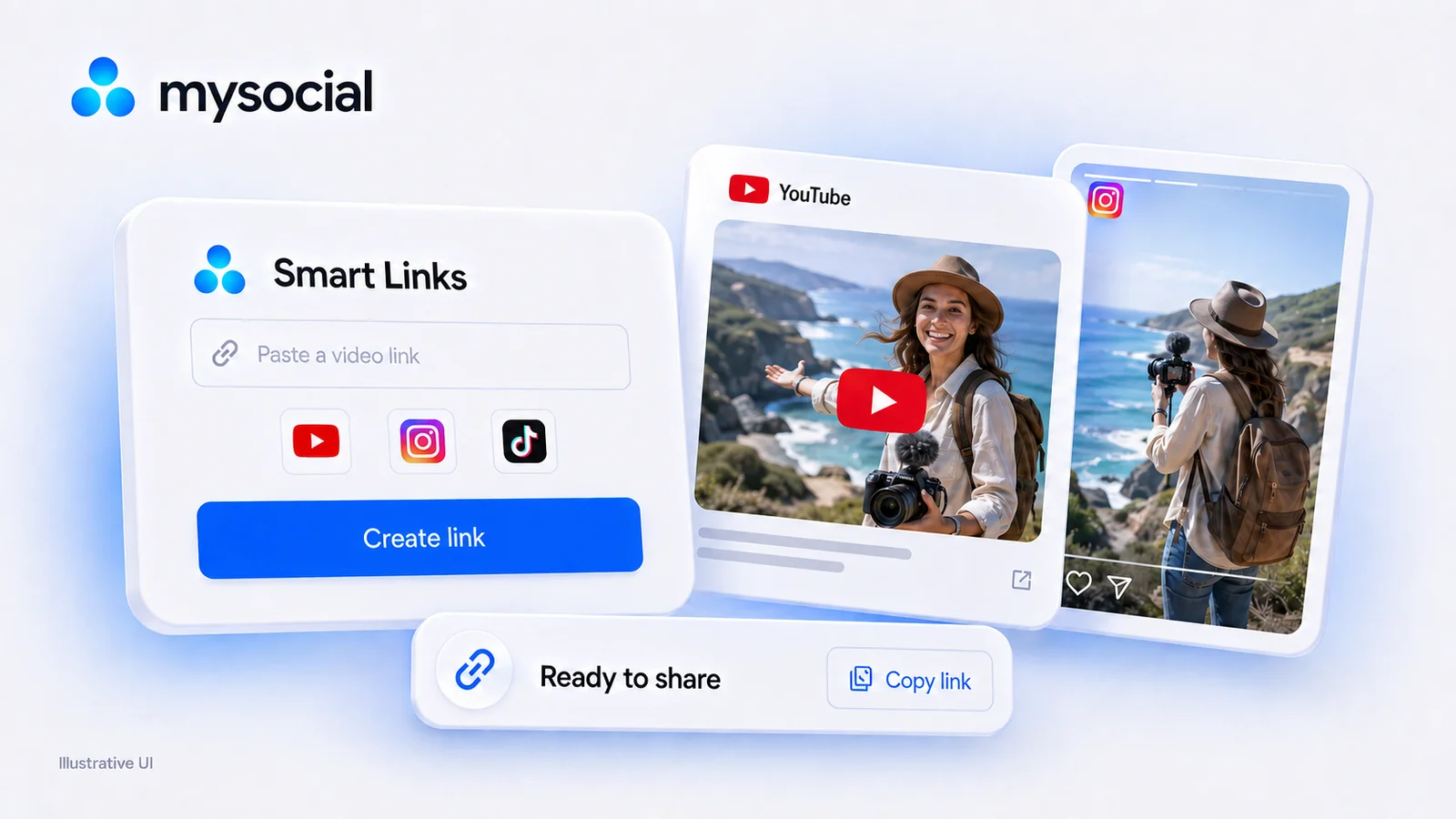
URLgenius charges per click. Mysocial Smart Links are free with no click cap on every plan. Verified 2026 pricing for URLgenius, LinkTwin, OpenUp and U2L.